





Fireplace & Attic Insulation Fire Risk: A Real Story
Gather around, homeowners — and those preparing to purchase a new home. This story highlights why due diligence and proper inspections matter more than most people realize.
Three nights before Christmas, on a cold winter evening, disaster struck a family home.
Thankfully, no one was injured. But the damage was devastating. The family was displaced for months during remediation. The total loss? Approximately 1.5 times the average home value in Wisconsin.
The Shocking Part
This happened despite precautions.
- The fireplace had been inspected and cleaned two years earlier.
- It was inspected again just two months before the fire.
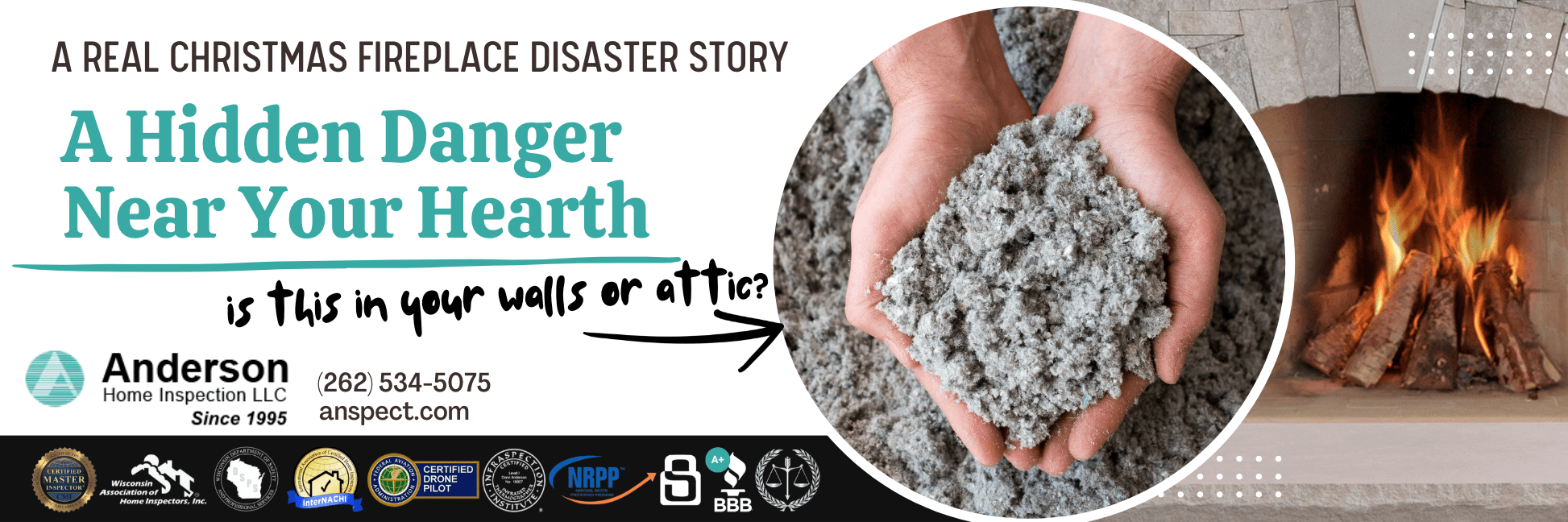
- The attic had recently been upgraded with cellulose insulation rated for a one-hour fire resistance.
Yet, a fire still ignited.
If you’re asking yourself, “Is my home safe?” — that’s exactly the right question.
What the National Fire Protection Agency Says
According to the
National Fire Protection Agency (NFPA)
:
“Chimneys, fireplaces, and vents shall be inspected at least once a year for soundness, freedom from deposits, and correct clearances. Cleaning, maintenance, and repairs shall be done if necessary.”
Why a Level 2 Fireplace Inspection Matters
Due to the limited scope of standard home inspection guidelines regarding fireplaces, we agree with:
- NFPA 211 (14.5.1)
- The Chimney Safety Institute of America (CSIA)
A Level 2 chimney inspection should be performed:
- At the sale or transfer of a property
- Before your first fire in a new home
- After changes to the fireplace system
- When switching fuel sources
- When installing a new insert
- After adding attic insulation
Contact a qualified chimney specialist for a comprehensive Level 2 inspection before your inspection contingency ends — and before lighting your first fire.
The Overlooked Risk: Insulation Near Chimneys
One critical issue we often see involves insulation installed too close to chimneys or flues.
While most insulation contractors do quality work, not all are fully versed in chimney clearance codes. Improper clearance between cellulose insulation and a chimney system can create hidden fire risks.
The consequences of oversight can be severe — even when everything appears properly maintained.
Final Thoughts for Homeowners
Fireplaces add warmth and comfort to a home. But they also demand respect and proper evaluation.
Be proactive. Ask questions. Verify clearances. Request proper inspections.
If you are buying a home — or know someone who is — share this story. A simple inspection at the right time can prevent devastating loss.
Your home should be a haven — not a hazard.
Very Sincerely,
Donn Anderson, CMI
Certified Master Inspector